


Can NIOS Save a Student’s Academic Year?

For many students in India, one failed exam does not feel like a small academic setback. It feels personal. Heavy. Embarrassing.
The silence after results often says more than words. Some students stop checking their phones. Some avoid relatives. Some pretend they are “fine” while quietly replaying the same thoughts every night.
“What now?”
That question becomes even harder when classmates move ahead and life suddenly feels paused.
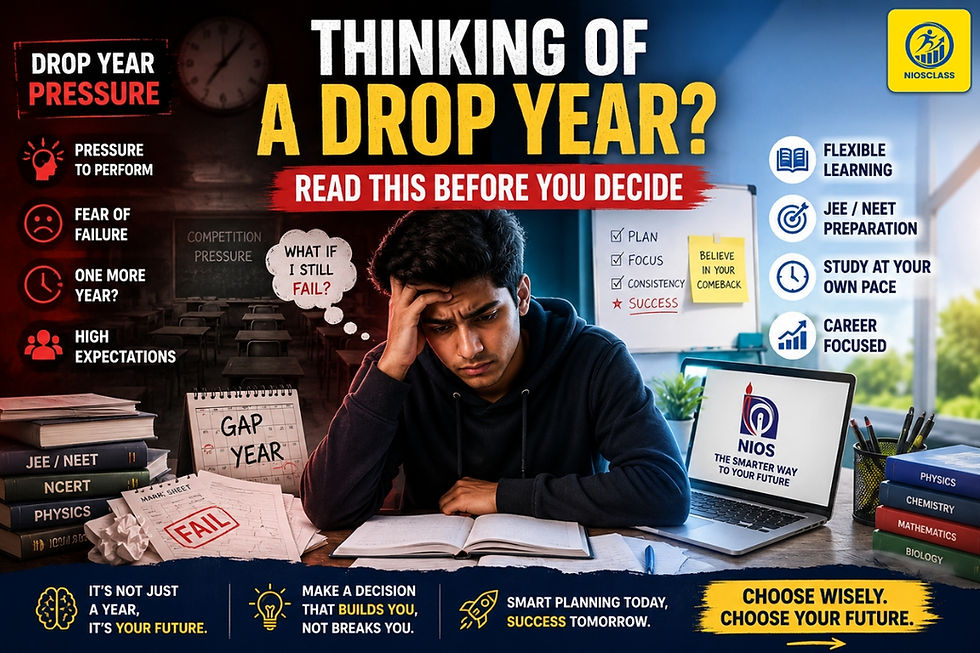
In situations like these, students often begin searching for alternatives that can help them continue education without completely losing confidence or time. That is one reason the nios senior secondary course has become more relevant for students trying to rebuild their academic journey in a more flexible way.
Because sometimes students do not need judgment.
They need another chance to continue.
Losing One Year Feels Bigger Than People Think
People casually say things like: “It’s just one year.”
But for students, it rarely feels “just” anything.
An academic year carries emotions attached to it:
friendships
confidence
future plans
family expectations
self-worth
When students fail or struggle academically, they often feel left behind while everyone else continues moving forward.
The emotional pressure quietly increases when comparisons begin.
Parents start worrying.
Relatives start questioning.
Students begin doubting themselves.
And somewhere in the middle of all this, education starts feeling frightening instead of hopeful.
That emotional reality is exactly why flexible learning systems matter more today than before.
Not Every Student Fails Because They Are Weak
One of the biggest misconceptions in India is that poor academic performance automatically means lack of intelligence.
But real life is rarely that simple.
Some students struggle because of anxiety.
Some go through health issues.
Some cannot adapt to classroom pressure.
Some prepare for competitive exams alongside school.
Some lose focus after emotional stress at home.
And some simply learn differently.
Traditional education systems often move at one fixed pace, whether students are emotionally ready or not. But learning does not work equally for everyone.
That is why many students today explore alternatives instead of giving up entirely.
A Second Chance Changes More Than Academics
What students truly lose after failure is not only marks.
It is confidence.
A student who once answered questions confidently in class may suddenly stop speaking altogether. Some begin avoiding social interaction because they feel ashamed of not matching expectations.
This emotional withdrawal is more common than people realize.
That is why systems offering flexible continuation matter deeply.
When students discover they can continue studies through options like 12th distance education, many of them slowly begin regaining emotional stability too.
The relief is not only academic.
It is psychological.
Because continuing education without repeating the same pressure environment can help students reconnect with learning gradually.
Flexible Learning Helps Students Continue Without Panic
One important reason students are considering alternative education today is flexibility.
Traditional schooling often follows strict schedules that may not suit every student’s mental or personal situation. Flexible systems allow students to study differently:
at their own pace
from home
with reduced social pressure
while preparing for other goals
while recovering emotionally
This flexibility becomes especially important for students who already feel mentally exhausted after academic setbacks.
Instead of constantly feeling “behind,” students get time to rebuild consistency slowly.
That difference matters more than most people think.
Students Want Education Without Constant Fear
A large number of students today are not running away from studies.
They are running away from fear.
Fear of humiliation.
Fear of comparison.
Fear of failure repeating itself.
Fear of disappointing people again.
When education becomes emotionally overwhelming, students stop learning effectively anyway.
This is why platforms offering nios online classes and flexible academic support are becoming increasingly relevant. Students feel more comfortable learning in environments where they are not constantly judged by attendance, rankings or social comparison.
And surprisingly, many students perform better once that fear reduces.
Parents Are Also Starting to Think Differently
For years, many families believed there was only one “correct” academic path.
But now, parents are witnessing something important firsthand - academic pressure is affecting mental health more seriously than before.
Students are burning out earlier.
Confidence is collapsing faster.
Even academically capable students are struggling emotionally.
Because of this, many parents are slowly becoming more open toward flexible education systems that help students continue learning instead of completely dropping out.
The mindset is shifting from: “What will people say?”
to
“What will help the child continue?”
That change may seem small, but it is changing thousands of academic decisions across India.
Saving an Academic Year Also Saves Momentum
When students completely disconnect from education after failure, returning later often becomes emotionally harder.
The longer the gap grows, the more self-doubt increases.
That is why continuing studies in some form matters.
Even when students are uncertain, tired or emotionally low, maintaining educational momentum helps psychologically. It keeps the idea of a future alive.
For students searching options like nios class 10th admission, the goal is often not just certification. It is avoiding the feeling that life has completely stopped because of one difficult phase.
That emotional continuity matters deeply.
Alternative Education Is Becoming More Accepted
A few years ago, many students hid the fact that they were pursuing open schooling or distance education. There was social stigma attached to it.
But that perception is slowly changing now.
People are beginning to understand that education journeys are not identical anymore.
Some students pursue sports careers.
Some work alongside studies.
Some prepare for government exams.
Some focus on creative industries.
Some simply need quieter academic environments.
Flexible education is becoming less about “failure” and more about adaptation.
That shift is important because it reduces shame around second chances.
Students Still Need Guidance and Structure
Flexibility helps, but students still need direction.
After academic setbacks, many students struggle with discipline because confidence has already weakened. They may want to study but feel emotionally disconnected from routines.
This is where proper mentorship and support become important.
Whether through study planning, emotional encouragement or doubt-solving, students often benefit from structured support systems while rebuilding consistency.
Understanding the admission status of nios, selecting subjects carefully and creating realistic study schedules can reduce confusion significantly during this phase.
Students recover better when education starts feeling manageable again instead of overwhelming.
One Result Should Not Decide a Student’s Entire Future
This is probably the most important thing students need to hear.
One failed result does not define intelligence.
It does not permanently destroy capability.
And it certainly does not decide an entire future.
Academic setbacks feel extremely painful in the moment because society magnifies them emotionally. But many students who once believed everything was over eventually rebuilt their path slowly, quietly and differently.
Not perfectly.
But steadily.
That is why systems offering second chances matter.
Not because they make education easier.
But because they make continuation possible.
The Real Importance of Flexible Education
At its core, flexible education is not only about convenience.
It is about recovery.
Recovery from pressure.
Recovery from shame.
Recovery from fear.
Recovery from believing that one difficult year has ruined everything.
And honestly, many students need that recovery more than another lecture about marks.
The future of education in India will likely become more adaptable because students themselves are changing. Their pressures are changing. Their goals are changing. Their emotional realities are changing too.
For families looking for a supportive nios coaching centre, the real need is often bigger than academics alone. They are searching for an environment where students can continue learning without constantly feeling broken by the system.
And sometimes, that second chance is exactly what saves an academic year - and the confidence attached to it.


Comments